

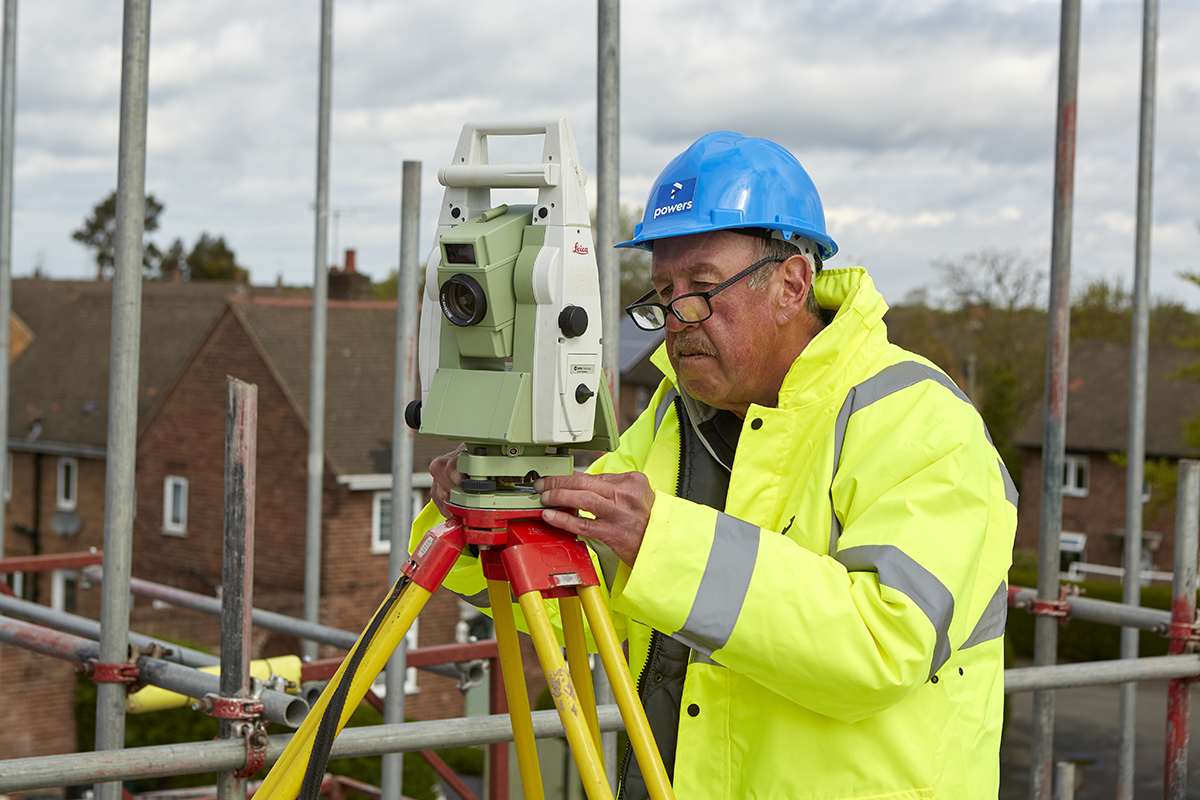
At Powers, that future is delivered on site by its site engineers – and Kevin Hayes has been delivering it for over four decades.
From Apprentice to Site Engineer
Kevin’s engineering career began in 1978 at just 16 years old, when he started an apprenticeship with ICI. Over five years of day release study, he gained an OND in Mechanical Engineering followed by a HND in Civil Engineering.
After qualifying, he moved into a technical design role, designing concrete and steel structures. But after three years behind a desk, Kevin knew he wanted to be closer to the practical side of construction.
He took an internal vacancy as a Site Civil Engineer covering the North West – and, as he puts it, “the rest is history.”
Kevin joined Powers in February 2014 and has been a key part of the team ever since. Bringing decades of site engineering experience, he strengthened the company’s on-site capability and continues to play a vital role in delivering projects across the UK.
He describes Powers as a “happy, busy family-run company delivering quality services across the UK” – something he values highly after many years in the industry.
Starting the Day – Precision from the Outset
No two days are the same on site – but precision always comes first.
On a recent reinforced concrete slab pour near Blackpool, Kevin started at 6:00am and finished at 11:30pm. The slab had to be poured in one continuous operation, requiring him to remain on site to ensure levels and positioning were exact.
Each morning begins by establishing site control and locking onto the project grid. Accuracy at this stage is critical. Every measurement must match the construction drawings precisely.
Translating those drawings into physical assets is where experience counts. Getting it right at the start sets the standard for the entire project.
Problem Solving in Real Time
Engineering rarely goes exactly to plan.
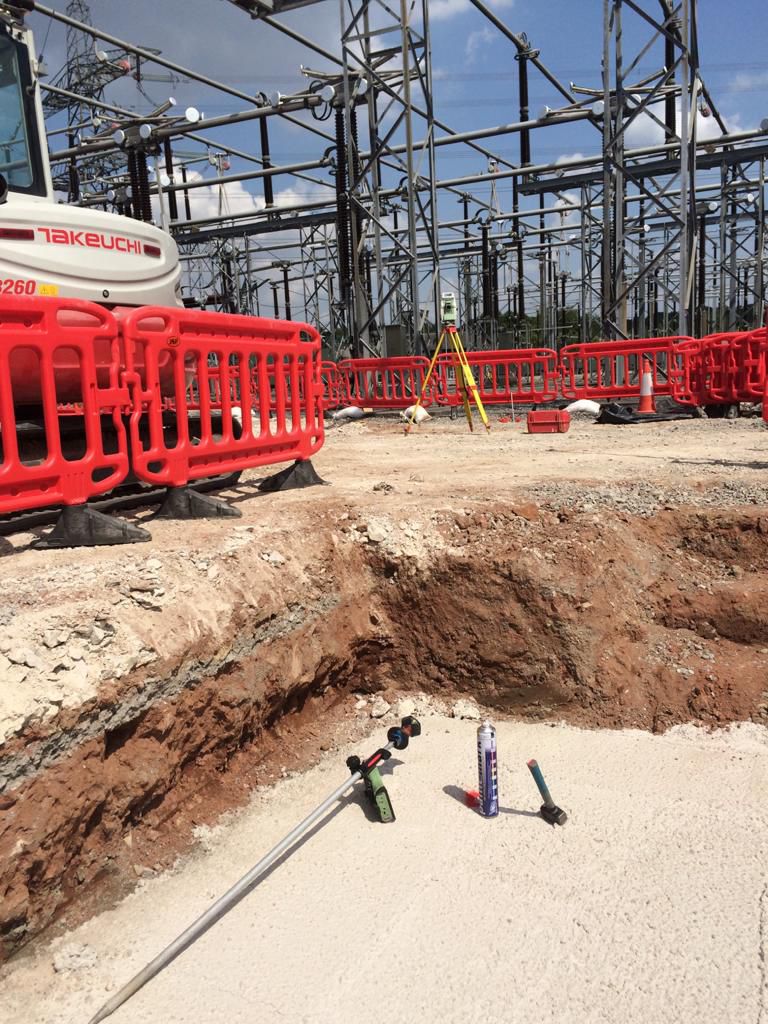
On a recent school extension project, Kevin identified inaccuracies in an existing survey provided by others. Had construction continued as designed, the footing layout would not have worked.
After three hours of recalculating and adjusting the layout, he was able to amend the positions before works progressed – preventing potential redesign costs and significant delay.
Getting it right first time reduces rework, saves time and protects budgets.
Smart Engineering in Practice
World Engineering Day 2026 highlights “Smart engineering for a sustainable future through innovation and digitalisation.”
For Kevin, smart engineering is practical and grounded in experience.
He uses total stations, GPS equipment and N4CE software daily – tools that allow for higher precision and faster data processing than ever before.
While technology supports the role, engineering judgement remains central. Manual calculations, careful checking and methodical working practices are still fundamental.
Delivering accuracy first time improves efficiency and contributes to more sustainable project delivery by reducing unnecessary rework and material waste.
Ending the Day – Preparing for Tomorrow
No matter how long the day has been, Kevin ensures the site is tidy, safe and ready for the next stage of works.
Drawings and calculations are reviewed. Activities are prioritised. Tomorrow’s plan is prepared.
It’s this organised and conscientious approach that keeps projects progressing smoothly.
What Makes a Good Site Engineer?
According to Kevin, a good Site Engineer must be:
- Confident
- Accurate
- Methodical
- Conscientious
- Tidy
- Able to deliver first-class verbal instructions
His advice to anyone considering a career in engineering?
“Go for it – but don’t panic or get stressed.”
Engineering That Stands the Test of Time
From aerospace facilities and nuclear sites to schools, roads, bridges and substations, Kevin’s career spans more than 40 years of UK infrastructure and construction.
At Powers, his experience continues to underpin projects across the country – ensuring precision, professionalism and smart engineering practices support every stage of delivery.